Mail forwarding for Australian expats: managing ATO, super and bank mail from overseas
May 21, 2026
Michael Tippett
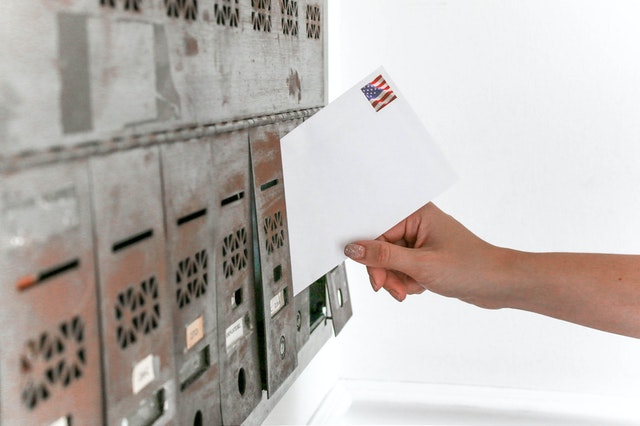
Meet Sarah. She is 31, a digital marketing manager from Melbourne, and she moved to Singapore on a two-year contract four years ago. The contract became a permanent role. Singapore became home. She has an apartment in Tanjong Pagar, a local bank account for everyday spending, and a lifestyle that is entirely oriented to South-East Asia. She also has a Westpac account she has had since she was seventeen, a superannuation fund she has contributed to for nine years, an ASIC-registered ABN from a side business she wound down in 2023, and a rental property in Reservoir managed by a local agent.
Australia keeps sending her mail. Her parents live in Doncaster. For the first two years, her mum checked the Reservoir letterbox whenever she was in that part of town and occasionally forwarded envelopes to Singapore by post. It worked, after a fashion. Then her parents went to Europe for six weeks in late 2024 and a rates notice from Darebin City Council sat unread for 47 days. There was a late payment fee. Not catastrophic, but enough to make the current arrangement feel unsustainable.
Sarah is not unusual. According to the Department of Foreign Affairs and Trade, more than one million Australians live permanently overseas. Many more are on working holidays, sabbaticals, or multi-year contracts that keep stretching. Almost all of them have some continuing obligation to Australian institutions — the ATO, superannuation funds, Medicare, ASIC, state revenue offices, or a property they still own. Those institutions, despite years of digital progress, still send some correspondence by post.
Why Australian institutions still send physical mail to expats
You may feel that you have gone as paperless as possible. Bank statements by email. Super fund on the app. MyGov for most government services. And yet the post keeps coming.
ATO notices of assessment, amended assessments, and compliance correspondence are still issued on paper even when your myGov account is configured for email delivery. Superannuation funds send annual benefit statements and product disclosure updates by post, particularly when a policy changes. ASIC correspondence for company directors and registered agents goes by post unless you have actively set an alternative. State revenue offices send land tax assessments by post. Victorian Electoral Commission enrolment updates. Jury summons. Medicare correspondence when a claim requires supporting documentation.
None of these senders have fully solved digital-only delivery. Some are required by law to provide a physical document. The result is that even the most digitally organised Australian expat receives somewhere between six and twenty pieces of meaningful physical mail per year that they need to read and act on — plus a continuing flow of junk mail and low-value statements to dispose of.
The approaches that do not scale
Sarah tried two approaches before a virtual mailbox.
Using her parents as a mail relay. This works until it doesn't. Parents are accommodating but they are not a mail service. They miss things. They lose things. They photograph envelopes on a phone and the image is blurry. They do not know which envelopes are urgent and which are not. During the European trip, mail accumulated for six weeks. Even when the arrangement worked, Sarah did not have reliable access to the content of her mail — just occasional blurry photos from her mum of whatever looked important.
Redirecting to her tenants. This is inappropriate and creates confusion about who is responsible for landlord correspondence relating to the property. The Residential Tenancies Act in Victoria is clear that landlord mail should not use a tenanted property as a de facto postal address for the owner.
She looked at an Australia Post PO Box at the Doncaster post office near her parents. But a PO Box requires regular in-person collection. From Singapore, it would still be her mum doing the collecting. The visibility problem does not go away — she still has no idea what has arrived until someone tells her.
Setting up with HotSnail
Sarah signed up to HotSnail in January 2025 during a visit back to Melbourne. She uploaded her passport and a utility bill from the Reservoir property for identity verification. Her account was verified and active before she flew back to Singapore. She now has a Gold Coast street address and PO Box number in her name.
She updated the following in her first two weeks after setup:
- ATO via myGov — postal address updated to HotSnail's Gold Coast address
- Superannuation fund member portal — postal address updated
- Westpac — address updated via internet banking
- ASIC — registered address updated even with the ABN wound down, as ASIC correspondence can follow registered addresses for years
- Darebin City Council — rates notice postal address updated
- Victorian Electoral Commission — enrolment address updated to HotSnail
- Her property manager — all landlord correspondence directed to HotSnail rather than the tenanted property
- Medibank — private health insurance correspondence
Her default auto-action is "scan envelope" for all incoming mail. For the ATO and Darebin Council she set auto-action to "open and scan" — meaning the full contents of those envelopes are scanned as a PDF the day they arrive, without her needing to take any action from Singapore. She sees a rates notice or an ATO assessment the same day it lands on the Gold Coast.
For everything else — the super fund annual statement, a health insurance policy update — she decides per item. She gets an email notification with the envelope photograph. She logs in, sees what it is, and either orders an open-and-scan or shreds it if the envelope tells her it is junk. She does not pay to scan junk mail.
What her expat mail routine looks like now
Sarah spends roughly four minutes a week on her Australian mail. She gets a notification when items arrive. She logs into the HotSnail portal from Singapore, usually on a Sunday morning over coffee. Most weeks she has zero to three items. She shreds catalogues and low-value statements immediately. Anything from the ATO or council was already auto-opened and is sitting as a readable PDF in her portal. Occasionally something needs physical handling — her tenancy agreement renewal earlier this year required her original signature. She forwarded it to her parents' Doncaster address, they counter-signed and returned it, and it was sorted in an afternoon.
She has not asked her parents to check her mail since January 2025. The arrangement faded away naturally because it stopped being necessary. Her parents still occasionally mention driving past the Reservoir property for peace of mind, but the mail is handled.
Tips for Australian expats using a virtual mailbox
- Update the ATO first. ATO correspondence is the highest-stakes physical mail you receive. Update your postal address via myGov as the first step. Note that the ATO distinguishes between your residential address and your postal address — give the ATO your actual overseas address as your residential address, and HotSnail's Gold Coast address as your postal address.
- Tell your super fund your overseas residential address separately. Superannuation funds are regulated entities that need your country of residence for withholding tax purposes. Do not give them only a Gold Coast virtual mailbox address — provide your actual Singapore, London, or other overseas address as your residential address, and HotSnail as your postal address.
- Maintain your electoral enrolment. The AEC requires Australians overseas fewer than six years to maintain an enrolment if they intend to return. You can use your HotSnail address as your enrolled address. HotSnail is based on the Gold Coast, so an account used as your enrolled address places you in a Queensland federal division. If you would rather remain enrolled in the division you left — a Victorian or New South Wales one, for example — use your HotSnail address for correspondence only and discuss your enrolled address with the AEC directly.
- Set auto-open for time-sensitive senders. ATO, council rates, and ASIC are the most likely to generate deadlines. Auto-open means you see the content the day it arrives and can calculate the response window from overseas without losing a day to a processing queue.
- Use forwarding in batches, not per item. If you receive parcels from Australian retailers, hold them for 30 days and request a consolidated forward to wherever you will be on your next visit. One shipment is significantly cheaper than five separate ones.
- Do not use your HotSnail address as your overseas residential address. HotSnail is your Australian postal address for receiving Australian mail. Your overseas address is your residential address for tax, banking, and immigration purposes. Keep them separate in every system or you create conflicting records that are difficult to unwind.
A note on Australian tax residency
This is not tax advice, but it is worth knowing that the ATO's test for Australian tax residency is not whether you have a postal address in Australia. Using an Australian virtual mailbox does not make you an Australian tax resident any more than a PO Box does. The ATO looks at your domicile, habitual abode, the 183-day test, and the superannuation test. A Gold Coast mailing address through HotSnail is a postal address, not evidence of residency. If you have questions about your residency classification, speak to a registered tax agent with experience in Australian expat tax.
What a virtual mailbox does do is ensure that ATO correspondence addressed to you reaches you promptly — so you can respond within deadlines regardless of where you are, and you have a stable Australian postal address to give the ATO for that purpose. For most expats that is the practical problem that needs solving.
Is this the right setup for you?
If you are an Australian living overseas with any of the following — an Australian bank account, a superannuation fund, an investment property, an ABN or ACN, or an ATO filing obligation — you will receive physical Australian mail whether you want to or not. A virtual mailbox is the most reliable way to receive, read, and act on that mail from overseas without depending on relatives or flying home to check a letterbox.
For a step-by-step walkthrough of everything to set up before a long stay overseas, see our overseas mail forwarding setup guide. For a direct comparison of a virtual mailbox against an Australia Post PO Box, see our virtual mailbox vs PO Box comparison. For Australians absent from a fixed address domestically rather than overseas, the grey nomads use case covers a similar problem.
Two adjacent situations worth knowing about: if you are returning to Australia for a few weeks rather than living here, see Australians returning home temporarily; and if you are retiring overseas rather than working, mail forwarding for Australian retirees overseas covers the Centrelink and Medicare side.
Sign up to HotSnail and manage your Australian mail from anywhere in the world