Parcel forwarding USA to Australia: a step-by-step guide
July 23, 2026
Michael Tippett
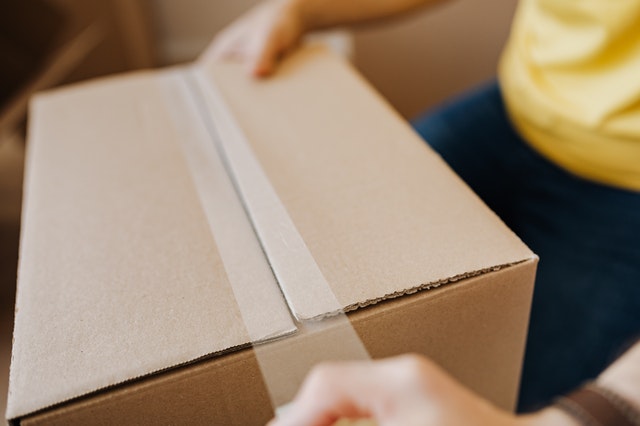
Most US retailers will not ship directly to Australia, and the ones that do often charge a heavy international shipping premium or block Australian addresses at checkout entirely. Parcel forwarding from the USA to Australia solves this: you get a US street address, shop US-only stores as if you lived there, and a forwarding company ships your order on to Australia. Done step by step, the process is straightforward, but each stage (the US address, consolidation, the carrier choice, and Australian customs and GST) has rules worth understanding before your first order ships.
1. How parcel forwarding from the USA to Australia works, step by step
At a high level, every shipment goes through the same sequence:
- You sign up with a parcel forwarding service and receive a personal US shipping address.
- You shop US retailers and use that address at checkout, the same as any US-based customer would.
- Your parcels arrive at the forwarder's US warehouse, where they are logged and, optionally, consolidated into a single shipment.
- You choose an international shipping method and the parcel is exported from the US.
- The shipment clears Australian customs, where its declared value and Harmonized System (HS) classification determine whether duty and GST apply.
- The parcel is delivered to your Australian address, either directly to your door or to a virtual mailbox for scanning and onward handling.
The rest of this guide walks through each of those steps in detail.
2. Step 1: Sign up and get your US shipping address
Sign up with a US parcel forwarding provider, such as parcelforwarding.com.au, and complete identity verification. Most forwarders require this because they are acting as your agent to receive goods on US soil, and because Australian anti-money-laundering rules apply to businesses handling international freight on a customer's behalf.
Once verified, you are issued a real US street address with a unique suite or unit number tied to your account, for example "Suite 4021, 123 Main Street, Wilmington DE". Many forwarders base their warehouses in states such as Oregon or Delaware, which have no state sales tax, so goods bought and shipped from those addresses are not subject to US sales tax the way a purchase delivered to, say, California would be.
3. Step 2: Shop US stores and ship to your US address
With your US address in hand, shop as normal at Amazon.com, Target, Best Buy, B&H Photo, or any US-only retailer, entering your forwarder's address and suite number as the delivery address at checkout. Because the order looks domestic to the retailer, you avoid the international shipping surcharges and country-blocking that often apply when a US site sees an Australian address.
When each parcel arrives at the warehouse, the forwarder logs it against your account and typically emails you a photo and the incoming weight. From here you decide whether to ship it immediately or hold it for consolidation with other orders.
4. Step 3: Consolidate multiple orders into one shipment
Consolidation means combining several separate US purchases into a single outbound parcel rather than paying international freight and a customs clearance fee on each one individually. Most forwarders offer a free storage window (commonly 30 to 90 days) during which incoming parcels can be held and combined.
Two things happen during consolidation that are worth knowing about:
- Repackaging. The forwarder removes bulky retail boxes and repacks the contents into a single, tighter box. International freight is usually charged on whichever is greater of actual weight or dimensional (volumetric) weight, so reducing box size directly reduces cost.
- Combined declared value. Once items are consolidated into one shipment, Australian customs assesses the total declared value of everything in that box, not each item separately. This matters directly for the GST threshold covered in step 6 below.
5. Step 4: Choose how it ships from the US to Australia
Forwarders offer a small menu of international carriers for the US-to-Australia leg: USPS (via Australia Post's inbound network) at the budget end, and DHL Express, FedEx or UPS for faster, fully tracked door-to-door service. USPS-based options are the cheapest but the slowest; tracking can go quiet once the parcel leaves the US and resume once Australia Post picks it up domestically, so actual delivery time depends on Australia Post's inbound processing at the time. DHL, FedEx and UPS cost more but stay tracked the whole way and clear faster, which matters most for heavier or bulkier consolidated boxes.
The trade-offs between a postal network and an express courier are similar to the carrier decision HotSnail customers make when forwarding parcels onward from Australia to a third country; see our comparison of Australia Post versus DHL Express for international parcel forwarding for how those same speed, price and tracking trade-offs play out.
6. Step 5: Customs clearance and HS codes
Every international shipment needs an HS (Harmonized System) code on its customs declaration, a short numeric code that classifies what the goods actually are, such as clothing, electronics, or cosmetics. Australian Border Force (ABF) uses this classification, together with the shipment's declared value, to work out whether duty applies and how the parcel should be processed on arrival. Your forwarder or the courier generates this classification and the accompanying commercial invoice on your behalf, based on the retailer's description and price for each item, so declared values should always match what you actually paid.
Undervaluing a shipment to reduce duty or GST is a customs offence, and a reputable forwarder will not do it for you. If a parcel is stopped for manual inspection because of an inconsistent or missing declaration, it can add days or weeks to delivery.
7. Step 6: GST and the $1,000 low-value import threshold
Since 1 July 2018, goods imported into Australia with a total customs value of AUD 1,000 or less are treated as "low value goods" under the ATO's low-value import GST rules. For these, GST is generally collected at the point of sale rather than at the border, and the entity responsible for collecting it is not always the original retailer.
This is where parcel forwarders have a specific legal role: a business that receives goods overseas on a customer's behalf and arranges delivery to Australia is classified by the ATO as a "redeliverer". If a redeliverer is GST-registered (required once its own Australian turnover, including redelivery services, passes AUD 75,000), it is responsible for collecting GST on eligible low-value parcels it brings into the country, even though the US retailer that originally sold the item is not registered for Australian GST and may not have charged it. In practice, this usually shows up as GST added to your forwarder's shipping invoice rather than at the US checkout.
Shipments with a total declared value above AUD 1,000 are handled differently: they require a full import declaration, and both duty (where applicable) and GST are assessed by Australian Border Force at the border, sometimes with an additional customs broker or clearance fee, before the parcel is released for delivery. This is one more reason consolidated shipment value is worth watching: combining several orders can tip a shipment over the $1,000 line and into the more involved, and more expensive, clearance process. The ABF's own guidance on this is published at abf.gov.au.
8. Step 7: Delivery to your Australian address
Once cleared, the parcel completes its journey through whichever carrier you chose in step 4: DHL, FedEx and UPS generally deliver door to door under their own network, while USPS-originated shipments hand off to Australia Post for the final domestic leg. Either way you should have live tracking from the point of Australian customs clearance through to delivery.
If you would rather not have parcels delivered to your home, for example if you move often, travel, or simply want everything logged and photographed on arrival, you can nominate a virtual mailbox address as the Australian delivery point instead of your residential address. HotSnail's mailbox service, which runs on the same operational infrastructure as parcelforwarding.com.au, will log the parcel, photograph it, and notify you by email so you can decide whether to have it forwarded on again, held, or opened.
Common mistakes to avoid
- Assuming every US retailer allows forwarder addresses. A small number of retailers restrict orders that are shipped to known freight-forwarder addresses, particularly for high-fraud-risk categories like electronics. Check your forwarder's help pages for any retailer-specific notes before ordering.
- Ignoring dimensional weight. A light but bulky item, like a padded jacket or a box of homewares, can cost more to ship than a small, dense, heavier item. Ask your forwarder to repack loosely-boxed items before shipping.
- Letting free storage expire. Free consolidation windows are not indefinite. Parcels left too long usually start accruing storage fees, so plan your consolidation around your provider's stated free period.
- Forgetting carrier-restricted items. Lithium batteries, aerosols, perfumes and some cosmetics are restricted or banned by individual carriers even when the item itself is legal to import. Check restrictions before buying anything battery-powered or pressurised.
- Not checking the combined declared value before shipping. If you are close to the AUD 1,000 threshold, ask your forwarder whether shipping two smaller consolidated boxes instead of one large one keeps each shipment under the low-value threshold and avoids the full import declaration process.
Parcel forwarding from the USA to Australia is a well-worn path for anyone buying from US-only retailers, and each step, from your US address through to the customs and GST rules on arrival, is predictable once you know what to expect. For the Australian side of your mail and parcels, including onward domestic forwarding once a shipment lands, see our AusPost versus DHL Express comparison.
Before you commit to a provider, our comparison of the best parcel forwarders for Australia looks at storage windows, consolidation fees, carriers and hidden costs across the main services.
Get your US address with parcelforwarding.com.au