Australia Post's every-second-day letter delivery: what it means for your mail
July 26, 2026
Michael Tippett
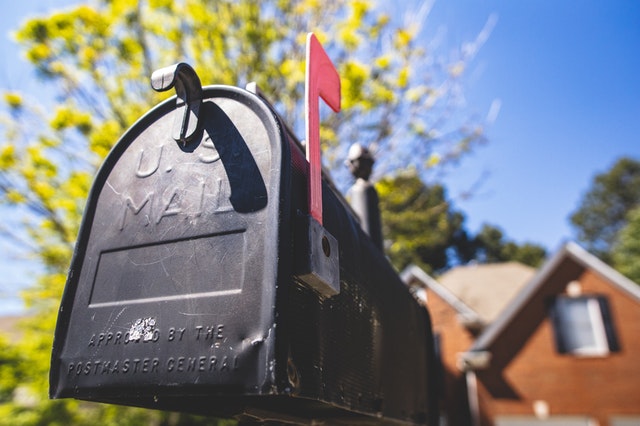
If it feels like your letterbox is quieter on some days than it used to be, that is by design. Following the postal service changes introduced in 2024, Australia Post delivers regular letters to metropolitan addresses every second business day rather than every business day. Parcels were not affected and continue to be delivered daily. It is a modest-sounding change, but it quietly reshapes the assumption a lot of people still hold about their mail: that anything posted to you will land within a day or two of being sent.
For most letters, this genuinely does not matter. For a smaller group of letters, the ones with a deadline printed on them, it matters quite a bit. This post covers what actually changed, why, and what to do differently if you rely on physical mail for anything time-sensitive.
What changed, in plain terms
The reforms modernised the service standards Australia Post is required to meet. The headline points:
- Regular letters: delivered every second business day in metropolitan areas, rather than every business day.
- Parcels: unchanged. Parcel volumes have been growing for years and parcel delivery continues on a daily basis.
- Delivery timeframes: the allowed window for a regular letter to arrive was extended, so "a few business days" is now a more honest expectation than "overnight".
- Post office network: retained, including the requirement to maintain outlets in regional and remote areas.
Because service standards are periodically reviewed, treat the above as the shape of the change rather than a permanent specification. The current, authoritative version always lives on the Australia Post service commitment page.
Why Australia Post made the change
The reasoning is structural rather than cost-cutting for its own sake. Letter volumes have fallen sharply since their peak in 2008, as banks, insurers, utilities, government agencies and employers moved correspondence to email and online portals. Parcel volumes moved in the opposite direction as online shopping grew.
That left Australia Post running a daily letter delivery network built for a volume of mail that no longer exists, while the genuinely growing part of the business was parcels. Reducing letter delivery frequency while protecting daily parcel delivery and the post office network was the compromise: it redirects effort to where the volume actually is, without withdrawing the letter service.
The practical takeaway is not that letters became unreliable. It is that "posted" and "received" are now further apart than most people assume, and deadlines have not moved to match.
Where this actually bites
The problem is rarely the extra day itself. It is the compounding of small delays against a fixed deadline. Consider a letter that gives you 14 days to respond. It may be dated a day or two before it is lodged, spend longer in transit under the extended delivery window, and then wait in an empty letterbox until someone checks it. A fortnight of notice can quietly become a handful of usable days.
The categories of mail where that compression causes real problems:
- Government correspondence. ATO notices, Centrelink and Medicare letters and state agency correspondence often carry response deadlines and, in some cases, are only sent on paper.
- Fines and infringements. Traffic and council infringement notices have statutory windows for paying or electing to have the matter heard. Missing one can add costs or escalate the matter.
- Legal and court documents. Anything with a service date or a deadline for filing a response.
- Insurance and financial renewals. Renewal notices and policy change notifications where the renewal date arrives whether you have read the letter or not.
- Cards and secure items. Replacement bank cards or documents that sit in an unattended letterbox for longer are exposed for longer, which is a security consideration as much as a timing one. We covered that risk in more detail in our guide on protecting your mail from identity theft.
Who feels it most
If you are home most days and check your letterbox regularly, the change is close to invisible. It is concentrated among people whose physical letterbox is not where they are:
- Australians living or working overseas, where the letter's Australian transit time is only the first leg of the journey.
- Frequent travellers and people who work away, returning to a full letterbox after weeks of accumulated mail.
- People who have recently moved, where a redirection adds handling time on top of a slower base service.
- Small business operators using a home or previous business address for registrations, where compliance mail cannot simply wait.
Five practical adjustments
- Move what you can to digital delivery. Bank, super, insurer, utility and telco correspondence can nearly always be switched to email or an online portal. This shrinks the paper stream down to the mail that genuinely has to be physical.
- Sort out the agencies that still post. Keep your address current with the ATO, Medicare and Centrelink, and enable digital correspondence through myGov where it is offered. Our address change checklist lists the institutions worth working through.
- Stop treating a printed deadline as the real one. If a letter gives you 14 days, plan on having meaningfully fewer usable days once transit and collection are accounted for.
- Do not leave mail sitting. An unattended letterbox is now unattended for longer between deliveries, which matters for both deadlines and security.
- Decouple your address from your location. If nobody is reliably at the letterbox, the fix is not faster post; it is not depending on that letterbox for notification in the first place.
Where mail scanning fits
The reason a scanning service helps here is specific: it changes what has to travel physically. Mail is received at a monitored address, and you are notified with an image the same day it is processed, so the notification no longer waits on a delivery round or on you being home. From the portal you decide per item whether to have the contents opened and scanned, forwarded to wherever you are, held in storage, or shredded.
For the deadline-bearing letters above, that is the meaningful difference. You learn about an ATO notice or an infringement when it arrives at the address, not when a delivery cycle and a letterbox check happen to line up. If you want the physical original as well, it can still be forwarded, at the standard domestic rates for Australian addresses, or under the international rates if you are overseas.
It is worth being clear about what this is not. Australia Post's own mail redirection is a good fit if you have simply moved and want everything to follow you to a new physical letterbox. The two services solve different problems, and we compare them directly in mail redirection versus a virtual mailbox. If you want to see how the setup works in practice before committing, the virtual mailbox setup guide walks through it step by step.
The bottom line
Every-second-day letter delivery is a sensible response to a real shift in what Australians actually send. The service did not become unreliable; the gap between posting and reading simply widened, while the deadlines printed inside those envelopes did not move. For most letters, nobody will notice. For the ones carrying a response date, the safest assumption is that you have less time than the letter says, and the practical answer is to stop relying on an unattended letterbox to tell you they arrived.
This change is one part of a longer trend. Our piece on the future of physical mail in Australia looks at where letter volumes are heading, and why the post that remains carries higher stakes per item than it used to.
Get your Australian mail scanned and delivered online with HotSnail